
In today’s rapidly evolving cybersecurity landscape, traditional threat modeling frameworks are struggling to keep pace with modern development practices and emerging threats. At Guardionet, we’ve observed a critical shift in how organizations need to approach security assessments, moving from conventional STRIDE modeling to a more dynamic Attack Modeling methodology.
The legacy of STRIDE: A foundation with limitations.
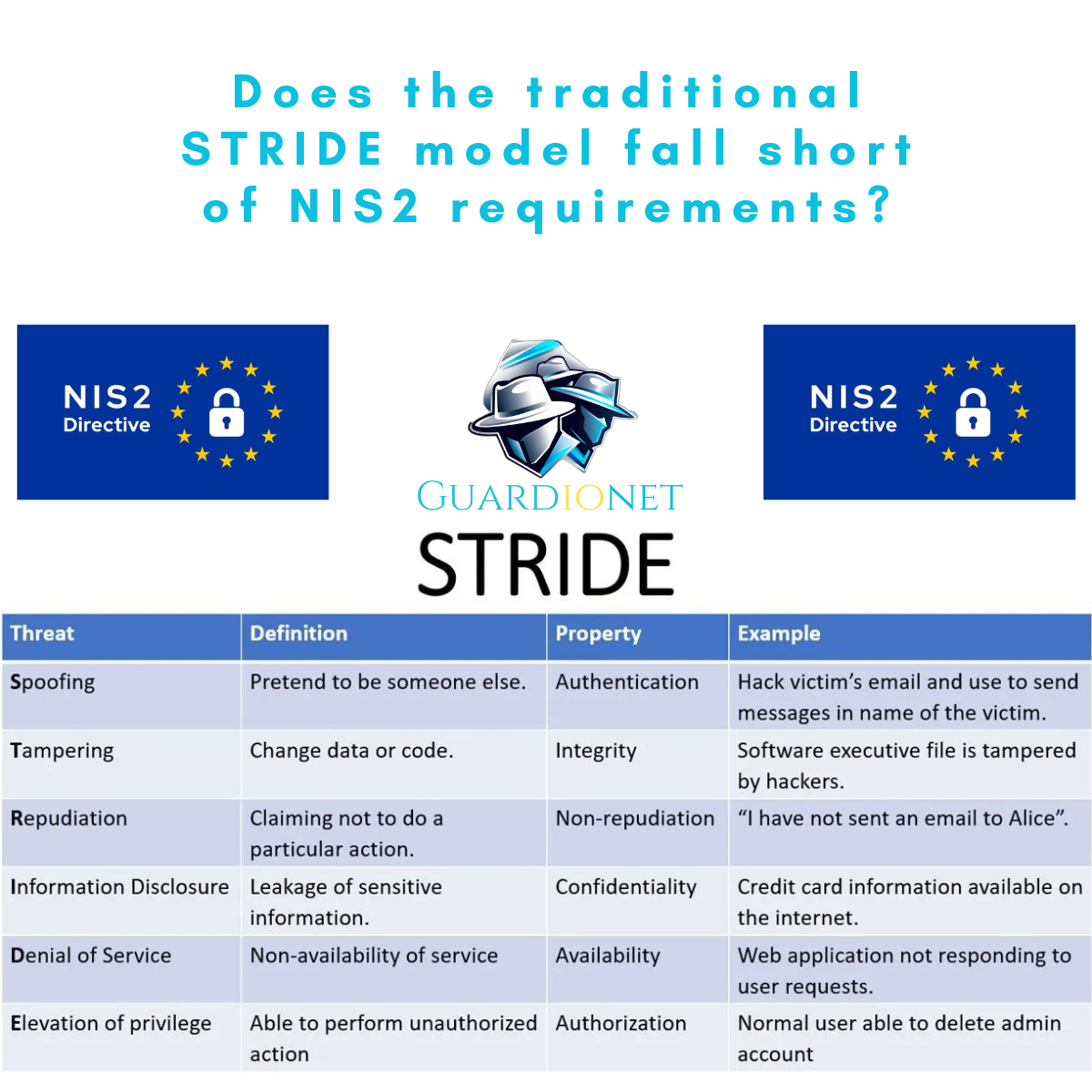
Microsoft’s STRIDE framework has long been considered the gold standard for threat modeling. The mnemonic device (Spoofing, Tampering, Repudiation, Information disclosure, Denial of service, Elevation of privilege) provided security professionals with a structured approach to identifying potential threats. However, as development cycles accelerate and threats become more sophisticated, we’re seeing significant limitations in this traditional approach.
The documentation burden.
One of the most common complaints we hear from our clients is the overwhelming volume of documentation produced by traditional threat modeling approaches. Think massive PDF reports, sprawling Excel sheets, and complex data flow diagrams that span multiple pages. While comprehensive, these documents often fail to provide actionable insights that development teams can implement effectively.
The need for change in modern security.
The cybersecurity landscape has fundamentally transformed:
Software engineers are deploying code faster than ever.
Hackers are developing more sophisticated attack methods.
Agile development practices require rapid security assessments.
Traditional high-level threat lists don’t address specific attack vectors.
Enter attack modeling.
At Guardionet, we are suggesting a streamlined approach to security assessment that a few cybersecurity top voices call it Attack Modeling. This methodology cuts through the documentation overhead while delivering more actionable results.
The Three-Step Process
Attack Surface Analysis
Detailed examination of each component.
Identification of potential entry points.
Clear mapping of vulnerable areas.
Attack Register Development
Comprehensive list of potential attacks.
Focus on practical attack vectors.
Real-world scenario mapping.
Security Control Implementation
Specific mitigation strategies.
Actionable security measures.
Clear implementation guidelines.
The Benefits of Attack Modeling
Reduced Documentation Overhead
Focus on essential information.
Clear, concise reporting.
Easier stakeholder communication.
Actionable Results
Practical security controls.
Implementation-ready solutions.
Clear priority frameworks.
Enhanced Testing Integration
Direct connection to penetration testing.
Clearer testing scope.
More effective security validation.
Making the Transition
Transitioning from STRIDE to Attack Modeling doesn’t have to be complicated. Guardionet’s expert team can help your organization:
Assess current security practices.
Implement Attack Modeling methodologies.
Train security teams in new approaches.
Develop custom Attack Registers.
Integrate with existing security frameworks.
The Future of Security Assessment.
While STRIDE laid important groundwork for systematic threat assessment, the future belongs to more agile, actionable approaches like Attack Modeling. At Guardionet, we’re committed to helping organizations make this crucial transition.
NIS2 Directive & Attack Modeling: Meeting EU’s new Cyber Security requirements

The October 17, 2024, deadline for implementing NIS2 has passed, but organizations have a little longer to comply with DORA because the date for implementation is January 17, 2025.
At Guardionet, we’re proposing on how companies approach both NIS2 compliance and modern security challenges by replacing outdated threat modeling with our innovative Attack Modeling methodology.
Understanding NIS2: The new era of EU Cyber Security.
The NIS2 Directive represents the EU’s most ambitious cybersecurity legislation to date, affecting thousands of medium and large organizations across essential sectors. With fines up to €10 million or 2% of global annual turnover, compliance isn’t optional – it’s critical for business survival.
Key NIS2 requirements:
Implementation of state-of-the-art security measures.
Regular risk assessments and documentation.
Supply chain security management.
Incident reporting within 24 hours.
Enhanced security governance.
Risk-based security approach.
Why traditional STRIDE falls short of NIS2 requirements?
While Microsoft’s STRIDE framework (Spoofing, Tampering, Repudiation, Information disclosure, Denial of service, Elevation of privilege) has been valuable, it presents several challenges in meeting NIS2 requirements:
Excessive documentation that doesn’t align with rapid incident reporting needs.
High-level threat assessments that miss specific attack vectors.
Time-consuming processes that conflict with the 24-hour incident reporting requirement.
Limited focus on supply chain security.
Take Action Now
Don’t let outdated security assessment methods hold your organization back. Contact Guardionet today to learn how Attack Modeling can strengthen your security posture while reducing documentation overhead.
# NIS2 #Cybersecurity #AttackModeling #SecurityAssessment #ModernSecurity #ThreatModeling

Leave a Reply